The 70/30 Interior Design Rule: The Secret to Balanced Home Interiors
Date: 11 Jul, 2025
Interior design is a slow craft. Quietly powerful. It happens in inches, not flashes. Most people don’t notice good design when it works—only when it doesn’t. And yet, what we call “style” in a home is often built on subtle principles. One of them—known among designers but rarely named aloud—is the 70/30 rule.
This isn't a rigid formula. It's not math, not really. It’s more like a soft gravitational pull—a way to keep a room from floating off or sinking into itself. For those working with a home interior designer in Rajarhat, understanding this rule can help you speak the same language. Or at least read between the lines.
A Rule Without Edges
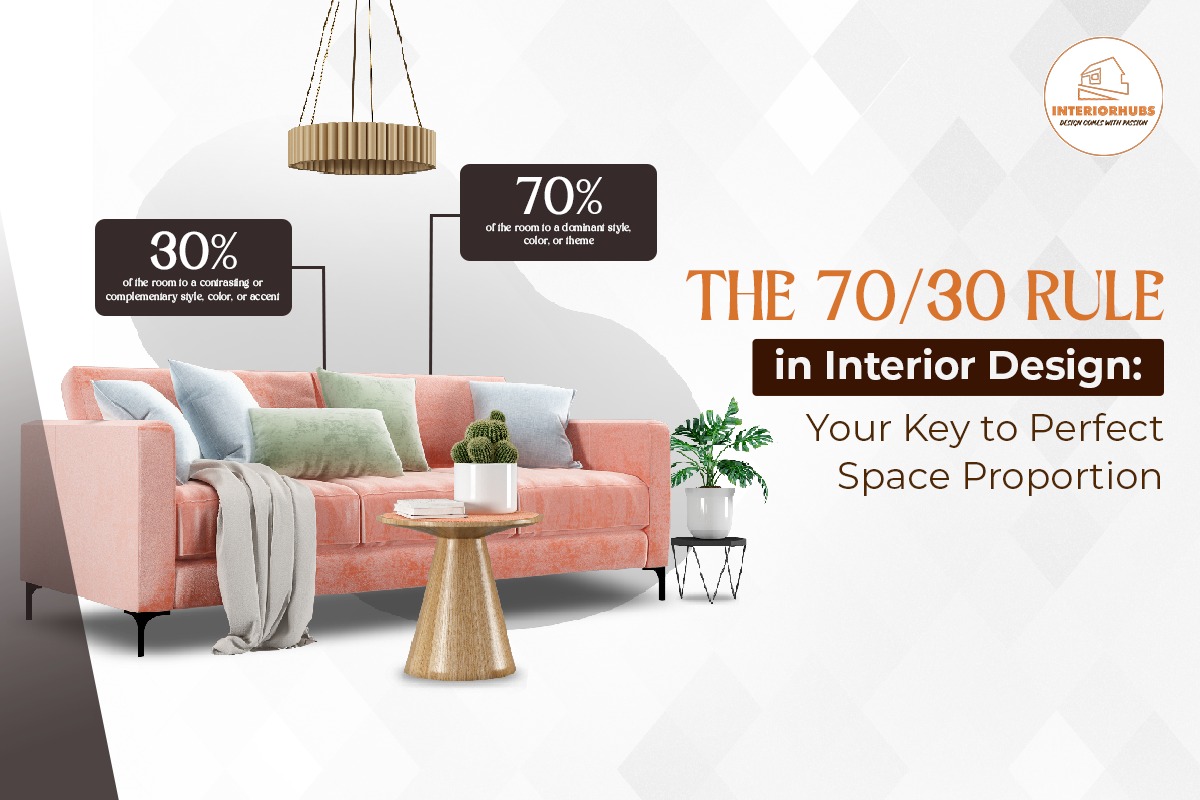
The idea is this: 70% of the space should follow a dominant style. The remaining 30% should contrast. That’s it. It is a split, but not a war.
The 70% forms the room’s spine—its weight and clarity. The 30% brings in tension, movement, and surprise. Together, they create a kind of visual rhythm, the way a poem relies on both meter and breakage. Too much sameness and a room goes limp. Too much contrast and it rattles.
So we measure. Or rather, we feel. The best interior designer in Rajarhat won’t hand you a blueprint with exact percentages—no ruler, no calculator. But they’ll know when the proportions are off. It’s intuition, shaped by experience.
A Place to Begin
You walk into a living room. Clean, open lines. Neutral tones. Scandinavian furniture with barely-there legs. That’s your 70%. It sets the tone. But then—an oil painting, thick with texture. Or a terracotta lamp shaped like a question mark. That’s the 30%. It punctuates. It makes the rest of the room visible.
This kind of thinking is helpful, especially in places where design is in flux. The newness of the place—the glassy towers, the tidy plots—wants order. But the people living here bring memory, culture, and layers. A good home interior designer in Rajarhat knows how to build that bridge. They listen. They edit. They make space for both the modern frame and the personal mess inside it.
Why This Works (When It Works)
We’re wired to want balance. But not too much of it. A room that’s too even—perfectly symmetrical, coordinated down to the throw pillows—feels like a hotel. Beautiful, but anonymous. Like someone wiped the fingerprints off the design.
The 70/30 rule lets a home feel lived in. It gives it breath. That 30%—the risk, the interruption—it’s what makes the rest meaningful. It’s the rough patch in a polished floor that reminds you it’s real wood. And it doesn’t always shout. Sometimes the 30% is just a shift in texture. Against a sea of sleek finishes, one wool chair. Or a matte-black handle in a kitchen of polished chrome. Small things. But noticed.
Not Just Style—Everything
People often think this rule is just about color. But it goes deeper than that. It applies to materials, shapes, patterns, and even light.
Take a kitchen. Most of it—your 70%—might be clean white cabinetry, steel hardware, and monochrome tiles. But you add a hand-painted backsplash. Or pendant lights in brushed copper. Suddenly, the space stops behaving like a catalogue.
Designers working in Rajarhat—particularly those designing new builds—see this all the time. The urge to keep things uniform is strong. There’s a fear of clashing, of “too much.” But sameness is its own risk. A refined interior designer in Rajarhat will push gently. They’ll suggest contrast, not chaos.
Function Hides Inside
This isn’t just about aesthetics. The 70/30 rule, when followed well, makes a space more usable. It tells you what to notice. What to ignore. It helps rooms organize themselves—not just visually, but functionally.
If 70% of your living room is serene and open, that 30% can give it an anchor. A heavy bookshelf. A cluster of frames. A nook with mood. These touches tell you where to pause. They create comfort without clutter.
The same principle applies to planning and spending. Knowing your dominant style helps you invest wisely. Knowing your accents helps you edit. A seasoned home interior designer in Rajarhat will often use this ratio to guide both mood boards and budgets. Quietly, practically.
Rajarhat’s Hybrid Identity
Rajarhat is young. Still shaping its voice. The architecture is modern, yes—but the people bring stories. Family heirlooms. Rituals. A certain rhythm of life that doesn’t quite fit into minimalist glass boxes.
This is where the 70/30 rule becomes cultural. A client might want a sleek, modern apartment, but they also want space for Puja decor. Or a clay diya. Or a brass swing they brought from their old house.
An experienced home interior designer in Rajarhat will listen to these notes. They’ll let the dominant style stay clean and fresh—but find room, in the 30%, for inheritance. For softness. For idiosyncrasy.
Start Here, Gently
Don’t panic about the numbers. Think of 70/30 as a mood, not a metric.
Begin with what you love most. That’s your 70%. If you like cool neutrals and low furniture, great. Let that guide the room. But then, look for contrast. Look for something warm and something sculptural. A mistake that looks beautiful when you stop calling it one.
And if you’re working with an interior designer in Rajarhat, bring your contradictions. Your photos. Your half-formed thoughts. A good designer won’t force a style on you. They’ll sift, reduce, and bring clarity.
And Watch for the Edges
Of course, it’s easy to go too far. The accent becomes a centerpiece. The centerpiece multiplies. Before long, the 30% becomes 50%. Then 80%. And you’re lost again.
The 70/30 rule is only useful if the majority still leads. Like a jazz solo—it only works when the band’s still playing underneath. Otherwise, it’s just noise.
The same applies to the home as a whole. One room can’t follow the rule while the others ignore it. Good design travels across thresholds. It carries forward.
That’s why a thoughtful home interior designer in Rajarhat will treat your home as a story, not a collection of pages. Each room is a chapter. Consistent tone. Occasional surprise.
The 70/30 Rule: A Final Technical Breakdown
Definition:
- 70% of a space follows a dominant design style.
- 30% introduces contrast through texture, color, form, or detail.
Purpose:
- Creates balance.
- Prevents monotony.
- Adds personality without chaos.
How to Apply It:
- Start with the 70%
- Choose your primary design direction.
- Stick to one dominant style (modern, rustic, Scandinavian, etc.).
- Apply this to major surfaces: walls, floors, and large furniture.
- Keep the color palette consistent and muted.
- Add the 30% contrast
- Use accents that break the dominant style.
- Add opposing textures, bold materials, or unusual forms.
- Think lighting, textiles, art, or small furniture.
- Avoid overwhelming the space—this is contrast, not conflict.
Where to Apply It:
- Color
- 70% dominant tones (neutrals, base shades).
- 30% accent colors (bold, dark, bright, or warm tones).
Texture
- 70% similar or complementary surfaces.
- 30% varied finishes—rough vs. smooth, matte vs. gloss.
Material
- 70% consistent materials (wood, metal, fabric).
- 30% contrasting ones (glass, stone, leather, rattan).
Style
- 70% within one genre (minimalist, traditional).
- 30% unexpected insertions—vintage, artisanal, eclectic.
Furniture and Decor
- Anchor pieces = 70%.
- Statement pieces = 30%.
Lighting
- General ambient lighting = 70%.
- Accent or decorative lighting = 30%.
Layout
- 70% of the space feels open, logical, and unified.
- 30% can be layered, asymmetrical, or intimate.
Why It Works:
- Provides structure.
- Keeps creativity focused.
- Allows space to feel both composed and expressive.
- Easy to scale—works in a single room or an entire home.
Common Pitfalls:
- Letting the 30% overpower the 70%.
- Choosing a dominant style that’s too generic or cold.
- Overusing trend-based contrasts.
- Forgetting to carry a balance across adjacent rooms.
In the End, Quiet Authority
The 70/30 rule isn’t about rules at all. It’s about rhythm. The unsaid. The pause in a sentence that makes you listen harder.
It’s not there to impress you. It’s there to make you feel at home.
Design, when done well, disappears. Or rather, it becomes background—the setting where your life happens. You don’t notice the ratios. You notice how the room feels at 4 p.m., when the light hits the wall just right.
If you live in Rajarhat, or are just moving in, think of this rule not as a constraint, but as a compass. And if you're lucky enough to work with a skilled interior designer in Rajarhat, let them guide you. They’ll know when to lean into simplicity. When to pull back. When to add just enough complexity to make the design feel like yours.
And in the end, that’s what you want. Not perfection. Just a home that holds your life—with balance, with beauty, with grace.